The intricate dance between sunlight and temperature plays a pivotal role in determining the sweetness of honeydew melons, a phenomenon that has long fascinated agricultural scientists. Recent breakthroughs in photosynthetic modeling have shed new light on how these environmental factors interact to influence sugar accumulation in the fruit's flesh. At the heart of this process lies a delicate biochemical balancing act where plants convert light energy into the sugars that give honeydew its characteristic flavor profile.
Understanding the photosynthetic machinery behind honeydew melon production requires examining the plant's response to its growing environment. Unlike many other crops, honeydew exhibits a particularly sensitive relationship with both light intensity and temperature fluctuations. The leaves act as solar panels, capturing photons and transforming them into chemical energy through a series of complex reactions. However, this energy conversion doesn't automatically translate into sweeter fruit - the subsequent steps of sugar transport and storage prove equally crucial.
Researchers have discovered that honeydew plants employ a sophisticated thermal regulation system that optimizes sugar production under specific temperature ranges. During daylight hours, moderate temperatures between 25-30°C appear ideal for maximizing photosynthetic efficiency. The plant's stomata remain open just wide enough to permit CO₂ absorption while minimizing water loss, creating perfect conditions for carbohydrate synthesis. As temperatures rise beyond this threshold, the plant begins diverting resources to cooling mechanisms rather than sugar production.
The nighttime period reveals another layer of complexity in the sugar accumulation process. Contrary to earlier assumptions that darkness halts sugar production, studies now show that honeydew melons continue biochemical processing during cooler night hours. Temperatures dipping to 15-20°C trigger enzymatic activity that converts temporary starch reserves into soluble sugars, which then migrate to the developing fruit. This explains why regions with significant day-night temperature variations often produce exceptionally sweet melons.
Light quality and duration emerge as equally critical factors in the sugar equation. Honeydew plants demonstrate a particular affinity for certain light wavelengths within the visible spectrum. Blue light enhances leaf development and stomatal regulation, while red light stimulates flowering and fruit set. The interplay between these wavelengths affects not just the quantity of photosynthesis, but the quality of photosynthetic products. Longer daylight exposure allows for greater carbohydrate production, but only up to a point - beyond 14 hours of light, the plant's metabolic pathways become less efficient at converting these carbohydrates into fruit sugars.
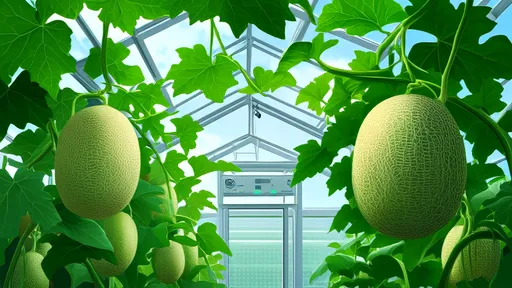
Modern agricultural practices have begun leveraging these insights through precision growing techniques. Greenhouse operators now employ dynamic lighting systems that adjust wavelength ratios throughout the growth cycle. Similarly, strategic planting schedules help ensure the critical fruit development phase coincides with optimal natural light conditions. Some innovative farms have even experimented with reflective ground covers to enhance light penetration to lower leaves, maximizing the plant's photosynthetic potential.
The relationship between environmental factors and sugar content isn't linear but follows a complex multivariate pattern. High light intensity can compensate for suboptimal temperatures to some degree, and vice versa. However, when both factors fall outside ideal ranges simultaneously, sugar accumulation drops precipitously. This explains why honeydew quality varies significantly across growing regions and seasons, even when using identical cultivars.
Current modeling efforts aim to predict sugar content based on historical weather patterns and real-time sensor data. By inputting parameters like daily light integral, average daytime temperature, and night temperature differentials, growers can forecast fruit quality weeks before harvest. These models continue to improve as researchers incorporate additional variables such as soil moisture, nutrient availability, and canopy architecture.
The implications of this research extend beyond honeydew production. The principles uncovered through studying this crop may apply to other cucurbits and even unrelated fruit species. As climate change alters traditional growing conditions, understanding these light-temperature interactions becomes increasingly important for maintaining crop quality. Future breeding programs will likely select for varieties that can maintain high sugar accumulation under a broader range of environmental stresses.
For consumers, this scientific progress translates to more consistently sweet honeydew melons year-round. The next time you enjoy a perfectly ripe slice, consider the remarkable biological processes and careful cultivation that made that sweetness possible. From photon capture to enzymatic conversion, nature's candy factory operates through an exquisitely tuned system that modern science is only beginning to fully comprehend.

By /Jul 17, 2025
By /Jul 17, 2025

By /Jul 17, 2025

By /Jul 17, 2025

By /Jul 17, 2025

By /Jul 17, 2025

By /Jul 17, 2025

By /Jul 17, 2025

By /Jul 17, 2025
By /Jul 17, 2025
By /Jul 17, 2025

By /Jul 17, 2025

By /Jul 17, 2025
By /Jul 17, 2025

By /Jul 17, 2025
By /Jul 17, 2025

By /Jul 17, 2025

By /Jul 17, 2025

By /Jul 17, 2025

By /Jul 17, 2025
