The world of fitness and athletic training is constantly evolving, with new methodologies emerging to push the boundaries of human performance. Among these, eccentric training has carved out a unique niche, offering benefits that extend far beyond traditional strength-building techniques. Unlike conventional exercises that focus on concentric movements, eccentric training emphasizes the controlled lengthening of muscles under tension. This approach has found its way into specialized applications, from rehabilitation to elite sports, proving its versatility and effectiveness.
One of the most compelling applications of eccentric training lies in rehabilitation. Physical therapists have long recognized its value in recovering from injuries, particularly those involving tendons and ligaments. The slow, deliberate nature of eccentric movements allows for precise load management, reducing the risk of re-injury while promoting tissue repair. For example, athletes recovering from Achilles tendon injuries often incorporate eccentric heel drops into their rehab programs. These exercises not only restore strength but also improve the tendon's ability to withstand future stress, addressing the root cause of many chronic injuries.
In the realm of sports performance, eccentric training has become a secret weapon for athletes seeking explosive power. Sports like basketball, volleyball, and sprinting require rapid deceleration and direction changes—movements that heavily rely on eccentric strength. By training muscles to absorb force more efficiently, athletes can jump higher, change direction faster, and reduce their risk of non-contact injuries. The adaptation goes beyond mere strength gains; it rewires the nervous system to handle high-force impacts, giving competitors an edge that's often visible in their performance metrics.
The aging population has also benefited from specialized eccentric training protocols. Sarcopenia, the age-related loss of muscle mass and strength, responds remarkably well to eccentric-focused regimens. Older adults often find these exercises more manageable than traditional strength training, as they can generate higher forces with less perceived exertion. This paradox—greater strength gains with lower cardiovascular strain—makes eccentric training particularly suitable for seniors looking to maintain independence and quality of life. Retirement communities and senior fitness programs are increasingly incorporating modified eccentric exercises to combat the effects of aging.
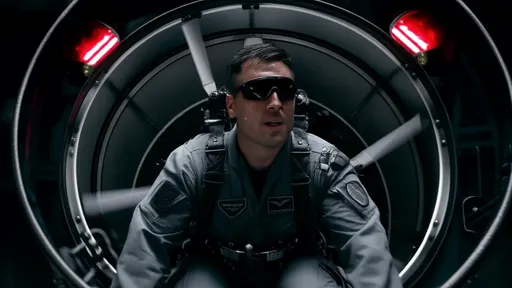
Another fascinating application emerges in spaceflight conditioning. Astronauts face severe muscle atrophy during extended missions due to microgravity's effects. Ground-based eccentric training protocols help prepare their bodies for the unique demands of space while also serving as a critical countermeasure during missions. The ability to simulate high-load scenarios without requiring massive weights makes eccentric training ideal for space-constrained environments. Researchers continue to refine these protocols, recognizing that maintaining muscle health in space could prove crucial for future Mars missions and beyond.
High-altitude mountaineering presents another unexpected application. Climbers preparing for expeditions often use eccentric training to condition their muscles for the prolonged descents that prove most damaging to muscle tissue. The repetitive stress of downhill hiking with heavy packs leads to severe muscle damage in unprepared individuals. Targeted eccentric conditioning allows mountaineers to minimize this damage, preserving strength for critical moments at high altitudes where recovery is nearly impossible. This specialized preparation often makes the difference between summit success and failure on peaks like Everest.
Performing arts communities, particularly dancers and circus artists, have quietly embraced eccentric training for years. The art forms demand both explosive power and controlled deceleration—precisely what eccentric development provides. Dancers working on landing mechanics reduce their injury risk while improving aesthetic quality of movements. Aerialists and acrobats use eccentric-focused regimens to enhance their ability to catch partners or apparatuses safely. This crossover between athletic training and artistic performance highlights eccentric training's adaptability across disciplines.
Rehabilitation centers specializing in neurological conditions have begun exploring eccentric training's potential for patients with Parkinson's disease and multiple sclerosis. The slow, controlled movements appear to help retrain neural pathways while building strength that improves daily functioning. Early studies suggest these protocols may help mitigate some movement disorder symptoms, offering hope where traditional therapies reach limitations. The neuroprotective aspects of eccentric training remain an exciting frontier for researchers.
Extreme sports athletes represent another group benefiting from specialized eccentric applications. Rock climbers, for instance, rely on eccentric strength to control dynamic moves and prevent uncontrolled falls. The training translates directly to improved performance on the wall, where fingertip strength and controlled lowering prove critical. Similarly, big-wave surfers use eccentric conditioning to prepare for the tremendous forces encountered when wiping out in massive surf. These niche applications demonstrate how eccentric principles adapt to even the most unconventional athletic demands.
The military and tactical communities have implemented eccentric-focused programs to prepare personnel for real-world scenarios. Soldiers carrying heavy loads downhill in mountainous terrain, SWAT teams rapidly descending stairs with gear, and firefighters controlling heavy equipment all benefit from enhanced eccentric capacity. These professions require not just strength but the specific ability to control forces in unpredictable environments. Training protocols have evolved to mirror these demands, reducing occupational injuries while improving operational readiness.
Looking ahead, the specialized applications of eccentric training continue to expand into new frontiers. From pediatric rehabilitation to geriatric care, from earthbound athletics to space exploration, the controlled lengthening of muscles under load proves its remarkable versatility. As researchers uncover more about the neuromuscular adaptations and tissue responses specific to eccentric training, its role in specialized conditioning will likely grow even more prominent. The future may see customized eccentric protocols becoming standard in fields we haven't yet imagined, continuing the methodology's journey from laboratory curiosity to indispensable training tool.

By /Jul 14, 2025
By /Jul 14, 2025

By /Jul 14, 2025
By /Jul 14, 2025
By /Jul 14, 2025

By /Jul 14, 2025

By /Jul 14, 2025

By /Jul 14, 2025

By /Jul 14, 2025
By /Jul 14, 2025
By /Jul 14, 2025
By /Jul 14, 2025

By /Jul 14, 2025

By /Jul 14, 2025

By /Jul 14, 2025

By /Jul 14, 2025
By /Jul 14, 2025

By /Jul 14, 2025

By /Jul 14, 2025

By /Jul 14, 2025