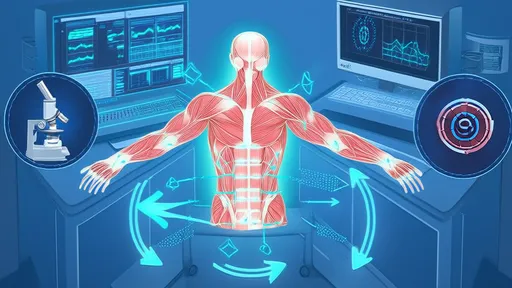
The human body is a marvel of biological engineering, capable of astonishing feats of strength, agility, and endurance. Yet, even the most finely tuned athletic machines are susceptible to the wear and tear of physical activity. In recent years, the field of sports science has witnessed a paradigm shift toward neuromuscular training as a cornerstone of injury prevention. This approach doesn't merely focus on building muscle or improving cardiovascular capacity; it rewires the very way our nervous system communicates with our muscles during dynamic movement.
At its core, neuromuscular training operates on a simple but profound principle: the brain and muscles must speak the same language under pressure. Traditional strength training often isolates muscle groups, creating imbalances that may go unnoticed until a sudden pivot or landing exposes their weakness. In contrast, neuromuscular exercises emphasize proprioception - the body's ability to sense its position in space - while simultaneously demanding explosive power or precise coordination. Basketball players landing from rebounds, soccer players cutting at acute angles, or gymnasts sticking dismounts all rely on this delicate neural conversation happening in milliseconds.
The science behind this training methodology reveals why it's so effective. Fast-twitch muscle fibers, responsible for rapid responses, require more neural activation than their slow-twitch counterparts. When we train these fibers through complex, multi-planar movements, we're not just building tissue; we're laying down neural pathways that become more efficient with repetition. Research demonstrates that athletes who incorporate neuromuscular drills exhibit significantly faster muscle reaction times when encountering unexpected perturbations - the kind that often lead to ACL tears or ankle sprains during competition.
Balance training forms the foundation of most neuromuscular programs, though it's far from the static poses beginners might imagine. Advanced protocols incorporate unstable surfaces, visual deprivation, and cognitive challenges to simulate game-time decision making. A hockey player might perform single-leg squats on a wobble board while catching and throwing a weighted ball, forcing her nervous system to process multiple streams of information simultaneously. This cross-modal integration pays dividends when she later navigates chaotic board battles during actual play.
Plyometrics, often misunderstood as simple jump training, take on new dimensions in neuromuscular contexts. The emphasis shifts from how high an athlete can leap to how efficiently they can absorb impact upon landing. Coaches now use force plate technology to analyze the millisecond timing of muscle activation sequences, identifying whether an athlete's hamstrings fire soon enough to protect their knees during deceleration. These microscopic details separate prophylactic training from generic conditioning programs.
Perhaps most intriguing is neuromuscular training's role in preventing non-contact injuries - those devastating moments when an athlete goes down without collision. Studies tracking muscle activation patterns show that fatigued athletes often develop neural inhibition, where protective reflexes dull just when they're needed most. Smart programming intersperses power drills with cognitive tasks to mimic late-game exhaustion, teaching the body to maintain proper mechanics even as the mind tires. Soccer players who trained this way demonstrated 50% fewer hamstring strains during the final quarters of matches.
The application of these principles varies dramatically across sports and positions. A baseball pitcher's neuromuscular regimen prioritizes rotational stability and scapular control to prevent UCL tears, while a downhill skier focuses on eccentric quad strength for bump absorption. What unites these approaches is their departure from traditional weight-room mentality; rather than chasing maximum lifts, athletes pursue movement quality under progressively challenging conditions. The numbers on the barbell matter less than how the body organizes itself under load.
Rehabilitation specialists have adopted these protocols with remarkable success. Athletes recovering from ACL reconstruction now engage in perturbation training long before returning to sport, with physical therapists gently disrupting their balance during squats to rebuild proprioceptive acuity. This represents a sea change from older models that cleared players based purely on strength metrics. Modern return-to-play criteria assess whether the injured limb contributes appropriately to whole-body movement patterns, not just whether it can bear weight.
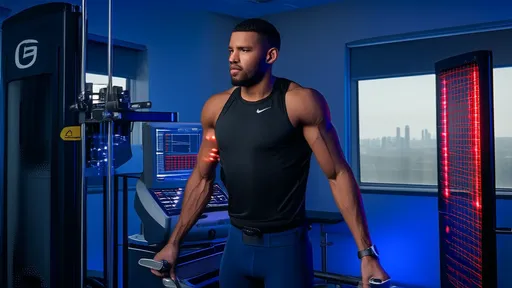
Emerging technologies are pushing neuromuscular training into new frontiers. Wearable sensors provide real-time feedback on muscle activation symmetry during drills, while virtual reality systems create reactive environments that challenge athletes' decision-making speed. Some elite teams now employ "neuropriming" devices that use subtle electrical stimulation to enhance neural drive during practice. Though controversial, these innovations underscore the central tenet: injury prevention lives not just in muscles, but in the quality of signals that animate them.
The implications extend beyond professional athletics. Weekend warriors and youth athletes stand to benefit enormously from incorporating basic neuromuscular principles into their routines. Simple interventions like balance board exercises or lateral hopping drills can fortify the body against common recreational injuries. For aging populations, these practices combat the neural degradation that leads to falls and fractures. In essence, we're discovering that many so-called "freak accidents" in motion stem from preventable neural inefficiencies.
As research continues, one truth becomes increasingly clear: the divide between neurological and muscular fitness is artificial. Every muscular action originates as a neural impulse, every coordinated movement reflects countless synaptic connections firing in harmony. By training this integrated system rather than its component parts, athletes aren't just avoiding injuries - they're unlocking movement potentials they never knew they possessed. The future of injury prevention lies not in bigger muscles, but in smarter communication between brain and body.
By /Jul 14, 2025

By /Jul 14, 2025

By /Jul 14, 2025
By /Jul 14, 2025
By /Jul 14, 2025

By /Jul 14, 2025

By /Jul 14, 2025

By /Jul 14, 2025

By /Jul 14, 2025
By /Jul 14, 2025

By /Jul 14, 2025

By /Jul 14, 2025

By /Jul 14, 2025

By /Jul 14, 2025

By /Jul 14, 2025

By /Jul 14, 2025

By /Jul 14, 2025

By /Jul 14, 2025

By /Jul 14, 2025

By /Jul 14, 2025